+86 15093323284 hams@ailunce.com




Is Ham Radio UHF or VHF? Ultimate Guide for New Hams in 2026
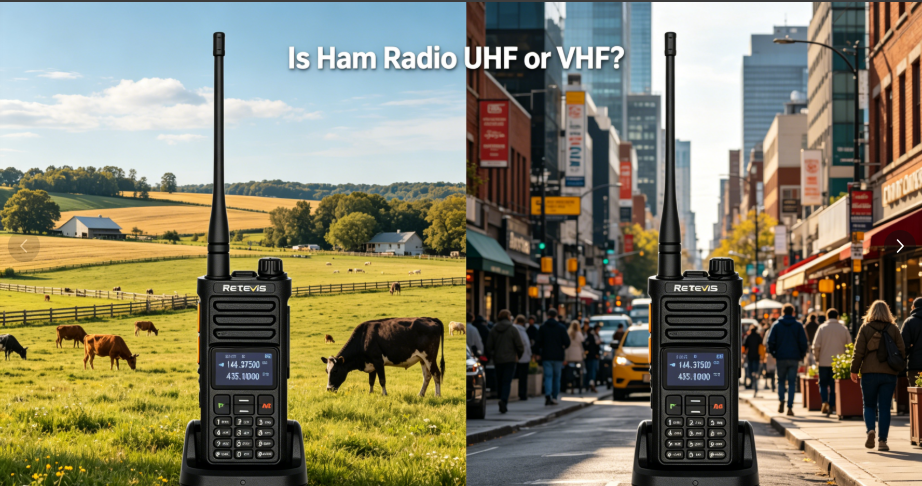
One of the most common questions from new and aspiring ham radio operators is: Is Ham Radio UHF or VHF?
The short answer is: Ham radio uses both UHF and VHF, plus HF (shortwave) and other bands.
Actually, you don’t have to choose one or the other — most modern ham radios support dual‑band VHF/UHF operation, which is the standard for beginners, emergency communicators, hikers, and city users alike.
In this guide, we’ll break down VHF vs UHF for ham radio, explain which bands you can use with an FCC Technician license, how propagation differs, when to use each band, and why a dual‑band VHF/UHF handheld is the best first radio for new hams.
By the end, you’ll understand exactly how these bands work and which setup fits your needs.
What Are VHF and UHF in Ham Radio?
Ham Radio Frequency Bands at a Glance
To fully understand the answer, here’s a simple breakdown of the three main band categories:
|
Band |
Frequency Range |
Typical Use |
Who Uses It |
Best for |
|
VHF (Very High Frequency) |
30–300 MHz (ham: 144–148 MHz) |
Local/regional, line‑of‑sight, less building penetration |
Technician (beginners) |
Rural, trails, open fields, lakes, marine |
|
UHF (Ultra High Frequency) |
300–3000 MHz (ham: 420–450 MHz) |
Urban, better through walls, shorter range outdoors |
Technician (beginners) |
Cities, indoors, buildings, dense neighborhoods |
|
HF |
3–30 MHz |
Long‑distance (worldwide) communication |
General & Extra class licensees |
global communication |
Is Ham Radio UHF or VHF? FCC License Facts
If you’re planning to get your FCC Technician license (the entry‑level ham license), you need to know exactly what you’re allowed to operate:
- The Technician class grants full privileges on VHF 2m and UHF 70cm bands.
- You do not need to choose UHF or VHF — you can use both legally.
- Most local repeaters run on VHF or UHF, so dual‑band lets you access nearly all public repeaters.
VHF/UHF are for line‑of‑sight or repeater‑aided communication (a few miles to 50+ miles).
VHF vs UHF: Detailed Comparison
|
Feature |
VHF (2m, 144‑148 MHz) |
UHF (70cm, 420‑450 MHz) |
|
Wavelength |
~2 meters |
~0.7 meters |
|
Outdoor range (line‑of‑sight) |
Longer (up to 50+ miles from a hill) |
Shorter (typically 5–15 miles) |
|
Building penetration |
Poor – struggles with concrete/steel |
Good – works inside most buildings |
|
Antenna size |
Longer (about 19 inches for 1/4 wave) |
Shorter (about 6 inches for 1/4 wave) |
|
Attenuation by foliage |
Low – works well in forests |
Higher – leaves absorb UHF more |
|
Rural / open terrain |
✅ Excellent |
⚠️ Limited |
|
Urban / dense city |
⚠️ Frustrating (repeater‑dependent) |
✅ Good |
VHF or UHF: Which One Should You Choose?
Even with a dual‑band radio, you’ll often need to pick a primary frequency for a given activity. Here’s a simple decision guide:
|
Your Main Operating Environment |
Recommended Primary Band |
Why? |
|
Rural / hilly / open land |
VHF (2m) |
Longer line‑of‑sight range, less interference |
|
Dense city / indoors / urban |
UHF (70cm) |
Penetrates buildings, works in basements |
|
Mixed (suburban + parks) |
Both (scan mode) |
Use VHF for open spaces, UHF when entering buildings |
|
Emergency preparedness |
Both (program repeaters for each) |
You never know where you’ll be during a disaster |
Pro tip for beginners: Start with a dual‑band handheld and practice using both bands. Join local repeater nets on both 2m and 70cm to feel the difference.
When to Use VHF vs UHF
Use VHF When
- Hiking, camping, off‑roading in open terrain
- Need longer range without a repeater
- Rural areas with few buildings
Use UHF When
- City, suburbs, dense neighborhoods
- Indoor, basements, parking garages
- Urban repeaters and digital modes (APRS)
Use Both (Dual‑Band) When
- You want full access to all local repeaters
- Switch between city and outdoor use
- Emergency communication (ARES/RACES)
- Want one radio for all activities
Why Dual‑Band VHF/UHF Is Best for New Hams
By now you know: ham radio uses both UHF and VHF. So why buy a single‑band radio when you can have both?
Benefits of Dual‑Band Ham Radios
- Access every local repeater
- Adapt to any environment
- Future‑proof — no need to upgrade soon
- Support APRS, GPS, digital modes
- Ideal for emergency readiness
Meet the Retevis HA2: The Perfect Dual‑Band Handheld for New Hams
✅True dual‑band operation – Covers 144–148 MHz (VHF) and 420–450 MHz (UHF), exactly what your Technician license allows.
✅ Clean FCC‑compliant output – No spurious emissions, so you won’t interfere with other services (a common issue with cheap imports).
✅ USB‑C charging – Charge from a laptop, power bank, or car charger. Perfect for field use.
✅ Easy programming – Use the keypad, free CHIRP software, or the app. No frustration.
✅ Compact & rugged – Fits in a pocket, survives drops.
✅ Bluetooth audio – Cable‑free headsets and speaker mics
✅ GPS + APRS – Real‑time location sharing for hiking, convoys
✅ 1024 channels + VOX– Practical for emergencies, hiking, and daily carry.
Ideal for: New hams, hikers, campers, emergency volunteers.
Real‑world example: In a suburban setting, use the HA2 on VHF to talk to a friend 10 miles away across open fields. Walk into a downtown coffee shop — switch to UHF and still hit a local repeater from inside the building. One radio, two worlds.
Retevis RA89 Series – High‑Power, Rugged Dual‑Band Workhorse
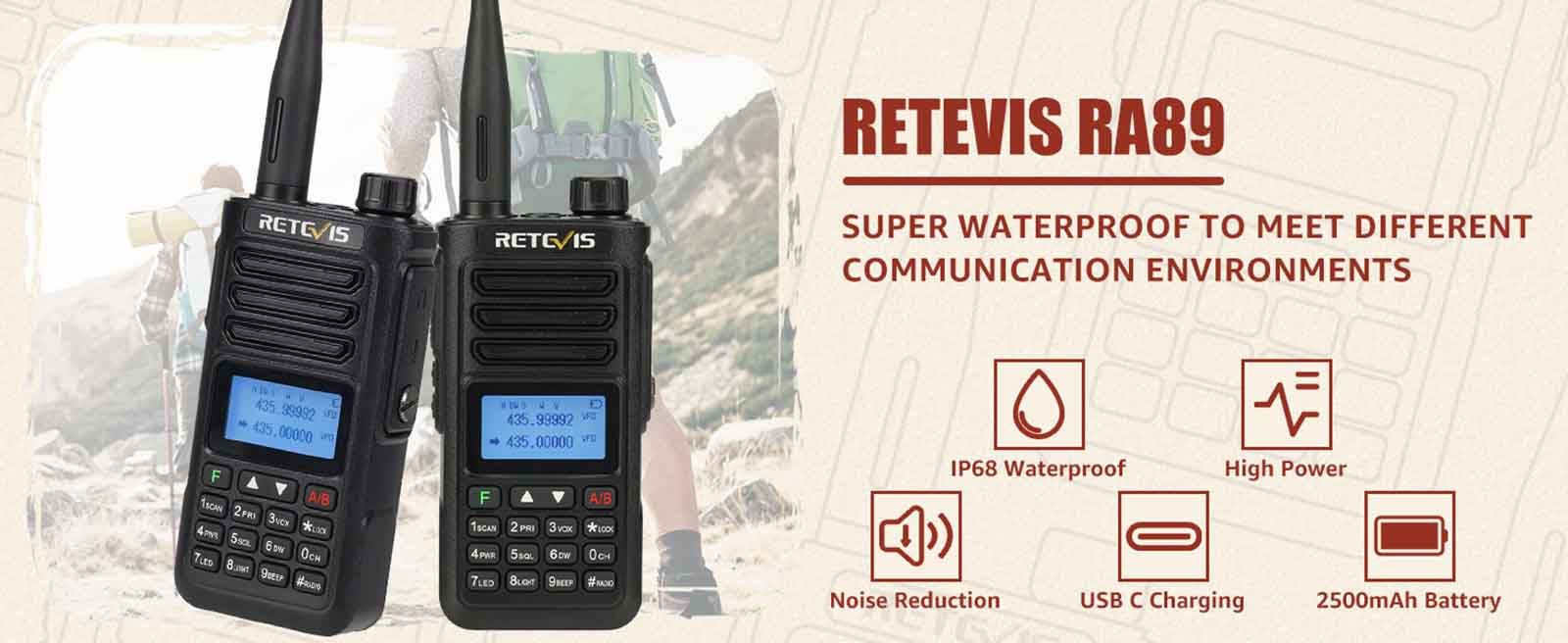
The Retevis RA89 series are professional‑grade dual‑band ham radios designed for users who need stronger signal, longer range, and extreme durability.
True Dual‑Band VHF/UHF (144–148MHz / 420–450MHz)
Fully matches Technician license privileges and works with all repeaters.
10W High Power (3 levels: 10W/5W/1W)
Stronger output for longer range in open areas and better penetration in challenging terrain.
IP68 Waterproof & Dustproof
Submersible design for rain, floods, storms, and disaster environments.
Intelligent Noise Reduction
Reliable communication requires both stable signals and good noise reduction technology.
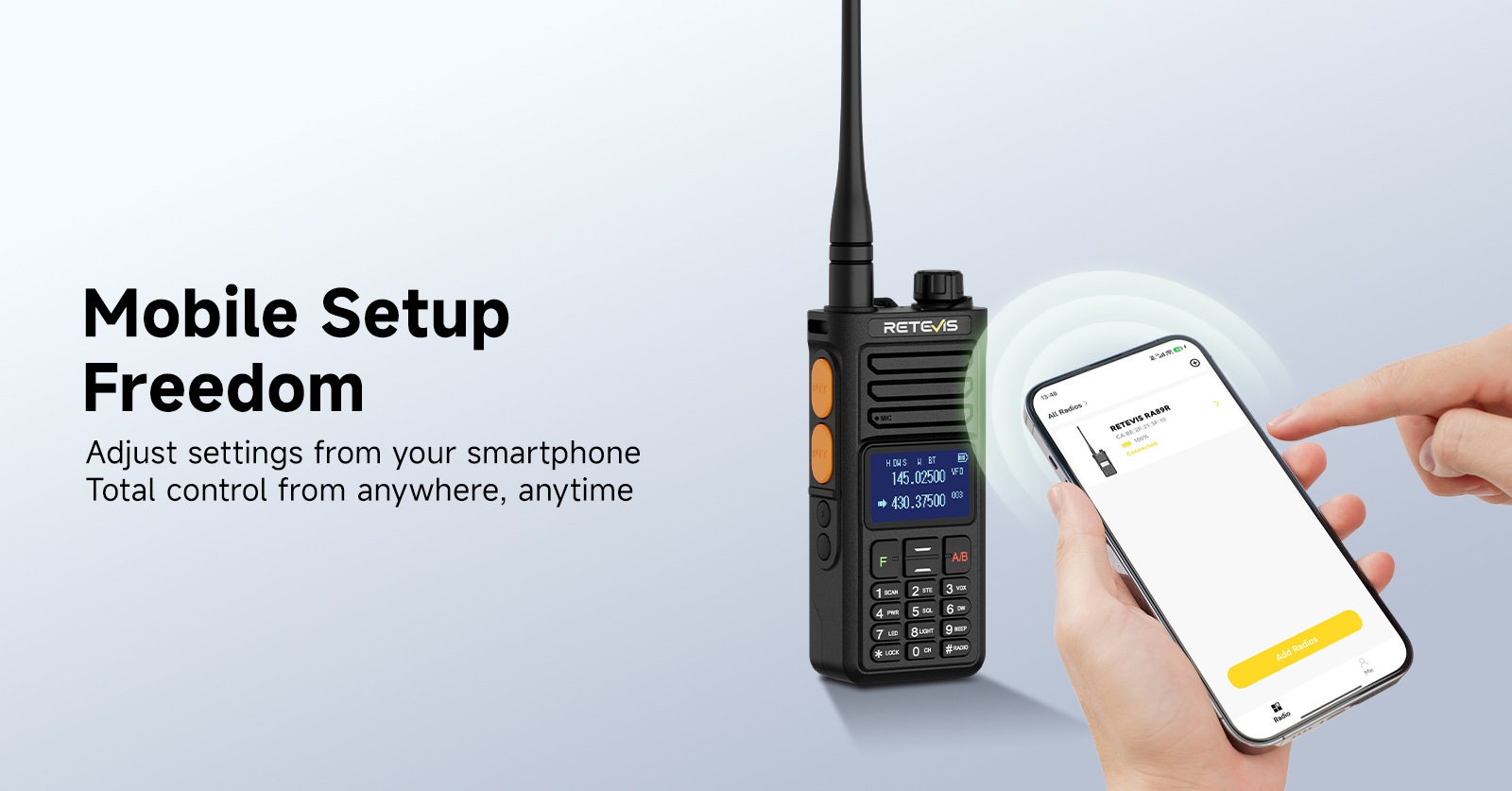
RA89R adds Cross‑Band Repeater & Bluetooth APP Programming
The RA89R supports cross‑band repeat to bridge VHF and UHF users — perfect for multi‑team events, emergency response, and signal dead zones. Also, it makes ham radio setup effortless: connect to your phone via Bluetooth, customize frequencies and features in the app, and hit the airwaves.
Dual Watch / Dual Standby
Monitor both bands at the same time — never miss a call.
Who Should Choose RA89 Series?
- Users who want longer range
- Outdoor, off‑road, and harsh‑environment users
- Emergency communication teams
- Anyone needing a tough, high‑power daily radio
Common Myths About Ham Radio Bands
|
Myth |
Truth |
|
“Ham radio is only UHF.” |
False. Hams use HF, VHF, UHF, and even microwaves. |
|
“VHF is obsolete because everyone uses UHF.” |
False. VHF remains king for rural, marine, and mobile use. |
|
“You need a different radio for each band.” |
False. Dual‑band radios like the Retevis HA2 cover both. |
|
“UHF has shorter range so it’s worse.” |
False. Range depends on environment. UHF is better in cities; VHF is better outdoors. |
|
“Single‑band radios are better for beginners.” |
False. Dual‑band is more versatile, connects to more repeaters, and lasts longer. |
Final Summary & Next Steps
So, is ham radio UHF or VHF? It’s both — plus HF and more. But for a beginner with a Technician license, the action happens on VHF (2 meters) and UHF (70 centimeters). The best way to start is with a legal, dual‑band handheld like the Retevis HA2 — it gives you the flexibility to talk through repeaters in the city, across open fields, or from inside a building.
Your next steps:
- Get your Technician license(if you haven’t yet).
- Buy a dual‑band handheld— Retevis HA2 is a great first choice.
- Program your local 2m and 70cm repeaters.
- Go on air and experience both bands for yourself.