+86 15093323284 hams@ailunce.com




Amateur Radio License Lookup & FCC Guide 2026
Introduction: Why Get an Amateur Radio License?
Amateur radio (“ham radio”) allows licensed individuals to transmit and receive on designated frequencies. Unlike a standard FM radio, a ham transceiver enables two-way voice, data, or Morse code communication – from a few miles to worldwide. In emergencies (e.g., hurricanes, earthquakes, wildfires), ham radio often works when mobile networks fail.
To legally operate, you need a government license. In the US, the FCC issues amateur licenses. Non US residents can also obtain an FCC license – it offers a 10-year term, international recognition, and helps with DXpeditions or visitor licenses in other countries.
This guide is based on official FCC rules, ARRL question pools, and real-world experiences from licensed operators worldwide.
EEAT compliance: Information verified against FCC CORES, ARRL public resources, and first hand experiences from multiple ham radio operators.
Step 1: Understand the Three License Classes
|
Class |
Questions |
Pass (74%) |
Privileges |
|
Technician |
35 MCQ |
26 correct |
VHF/UHF + small HF |
|
General |
35 MCQ |
26 correct |
Technician + more HF |
|
Amateur Extra |
50 MCQ |
37 correct |
All amateur bands |
Sequential: You must pass Technician before General, and both before Extra. However, you can take all three in one exam session.
Question pools are updated every four years. Always check ARRL for current pools.
FCC exams emphasize current regulations, safe operation, and modern communication technologies. Even if you hold another country’s license, study FCC-specific rules carefully.
Step 2: Obtain a US Mailing Address (Required for Non US Residents)
The FCC requires a valid US mailing address. Non US applicants can:
Use a friend/relative’s US address
Use a forwarding service (e.g., comGateway, ezship)
Prepare this address before registering for an FRN.
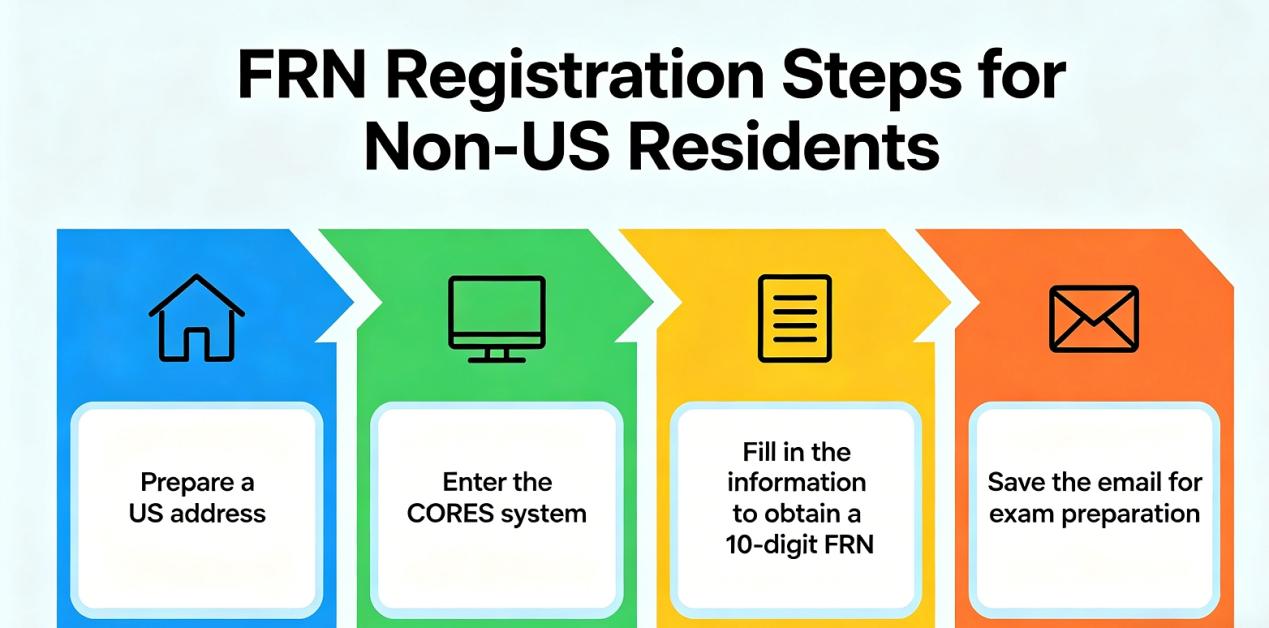
Step 3: Register for an FRN (FCC Registration Number)
An FRN is a free 10 digit identifier. Steps:
Go to FCC CORES system
Create a new user account
Fill in your personal details (name, US address, email)
Submit – you’ll receive a confirmation email with your 10 digit FRN
Print or save that email – required at the exam
Detailed guide: https://vea.org.au/register-for-a-frn-number (international friendly)
Step 4: Schedule Your Exam (Online or In Person)
Online Remote Exam (Recommended for non US)
International friendly provider: VEA (https://vea.org.au/book-us-online-exam) – remote proctoring, flexible time zones.
Fee: ~10–15 USD per session (multiple exams same session, no extra fee)
Also find sessions at HamStudy.org/sessions
In-Person (US only)
ARRL exam search: enter your ZIP code
Fee: ~$15 (cash/check)
You’ll need: FRN, valid email, payment (PayPal for most remote sessions).
Step 5: Study Effectively – Free & Paid Resources
Estimated study time (45–60 min/day):
Technician: 1 week
General: 1.5 weeks
Amateur Extra: 2 weeks
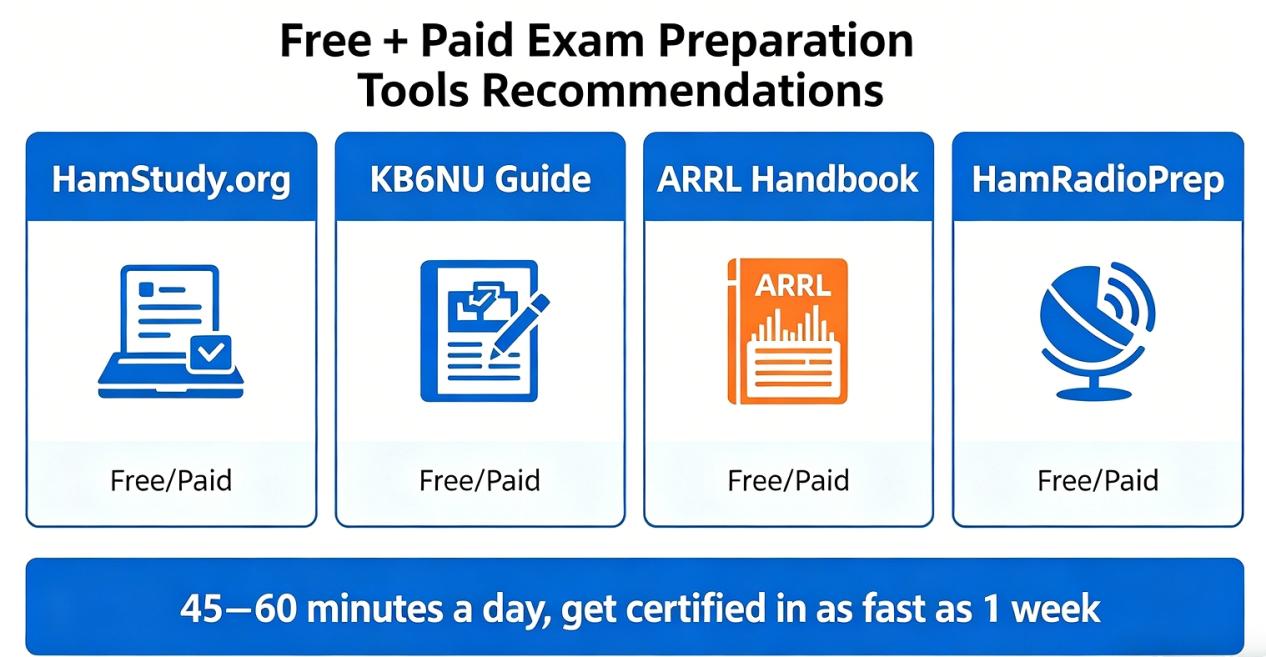
🆓 Free (Highly Recommended)
|
Resource |
Description |
|
Spaced repetition flashcards, every question explained. Use “Study Mode” to memorize quickly. |
|
|
KB6NU Technician Guide |
Free, up to date PDF. |
|
Older ARRL manuals (3rd/7th Ed) |
Good foundation, though not fully current. |
Paid (with real user review)
HamRadioPrep.com – recommended by many test-takers.
Video lessons + transcripts + quizzes for each section.
Final practice exams show which section you need to review.
Real review: “I crammed over a weekend, taking 3–4 practice tests daily. On exam day I failed the first Technician attempt by one question (rushed). Paid another $15, slowed down, and passed easily.” – A US ham
Study strategy (tested by international applicants):
Go straight to HamStudy.org flashcards.
Take full practice exams until you consistently score >85%.
Use KB6NU or ARRL manuals only for concepts you don’t understand.
On exam morning, take 2–3 warm-up tests.
Step 6: Exam Day – What to Expect
Online: Log in 15 min early, need webcam, quiet room, ID, FRN printout.
In-person: Bring pencils, eraser, FRN printout, ID, and exam fee.
If you fail: Immediate retake allowed (pay another ~$15).
Real case: One test-taker missed passing by 1 question, retook immediately, and passed with 30/35. Don’t give up.
Step 7: Pay FCC $35 Fee & Get Your Call Sign
The FCC license fee is $35 USD (no longer free). Timeline:
Exam team submits your results within 3–10 days.
FCC sends a payment notification email.
Pay via your CORES account.
Within 1–3 business days, your license and call sign are issued.
How to Perform an Amateur Radio License Lookup
Visit FCC ULS: https://wireless2.fcc.gov/ULS
Select “Amateur” service
Search by Call Sign, FRN, or Last Name
View license details, expiration date, and any restrictions
Use this to verify your own license or check other operators.
Step 8: After You Get Your License – First Radio & On Air Tips
Now you can legally transmit! For beginners, choosing the right radio can make a huge difference.
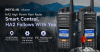
Recommended Starter Radio: RETEVIS RA89R
If you’re looking for a handheld that grows with you, the RETEVIS RA89R is a compelling choice. It packs advanced features usually found in more expensive radios.
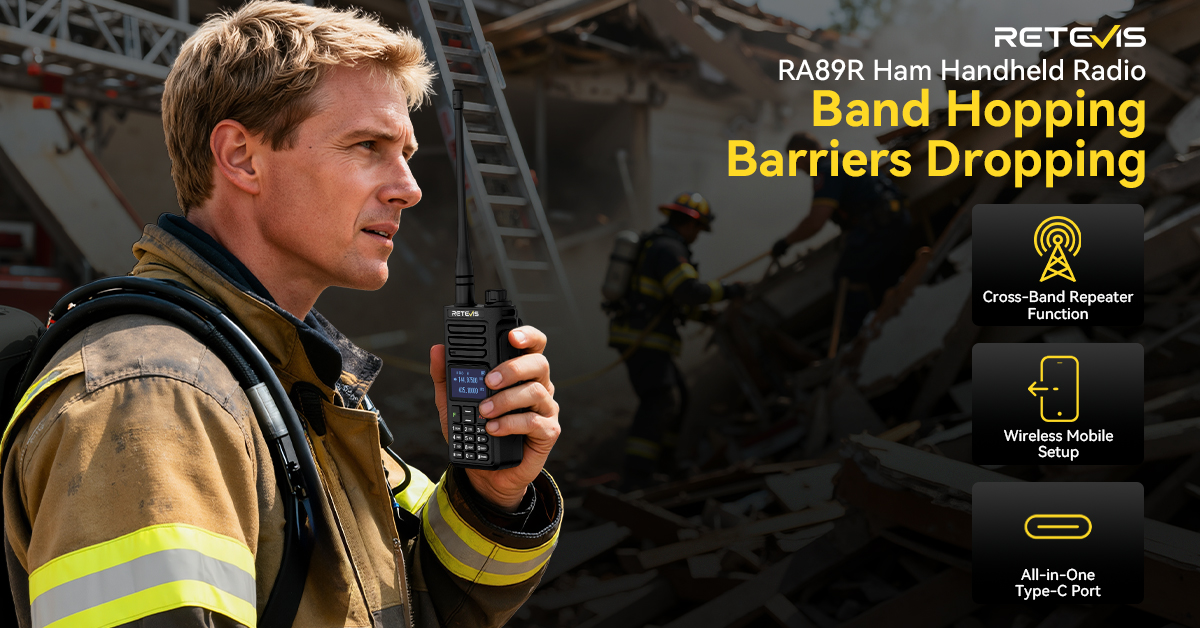
Traditional programming requires a PC and clunky software. With the RA89R, you can wirelessly program channels, frequencies, and settings directly from your smartphone via the dedicated app. Perfect for field adjustments.
The RA89R features a built-in cross-band repeater (VHF↔UHF). This allows the radio to act as a portable repeater, receiving on one band and retransmitting on the other – ideal for group communications in outdoor or emergency scenarios where you need to bypass obstacles.
The 2800mAh battery delivers up to 15.2 hours of use. It charges via standard USB Type-C – use your phone charger, power bank, or car charger. No bulky cradle needed.
Final EEAT Tips from Experienced Hams
Use spaced repetition on HamStudy.org – 3x more efficient than rote memorization.
Short on time? Drill the question pool directly instead of reading entire manuals.
After getting your call sign, get on a repeater within a week. Tell others you’re new – 99% will gladly help.
For non US residents: prepare your US mailing address and FRN early – these are the most common bottlenecks.
Take action today: Get your FRN, open HamStudy.org, and book a remote exam session. The amateur radio community welcomes you!