+86 15093323284 hams@ailunce.com




CB vs Ham Radio: Why Getting a Ham License Is a Better Long-Term Choice
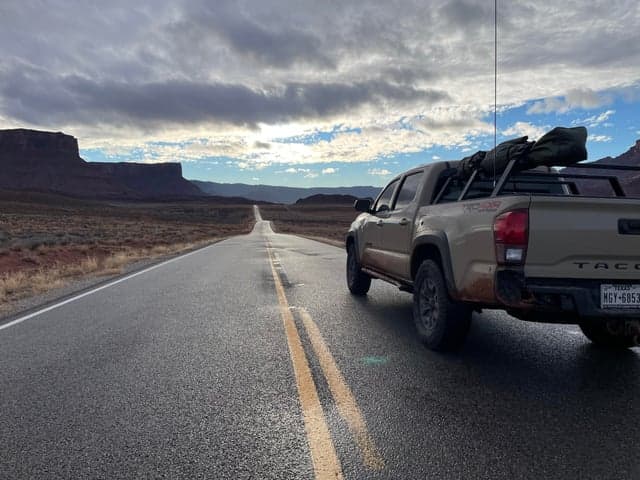
In the world of two-way radio communication, CB vs Ham Radio is a classic debate. CB radios require no license and work right out of the box, making them seem like the easiest entry point for beginners. However, this article draws on real-world user experiences, technical capabilities, and long-term value to explain why getting an amateur radio license is a more worthwhile investment, and introduces a quality device suitable for beginners.
1. CB Radio: Simple but Limited "Entry-Level Toy"
The biggest advantage of CB radio is that it requires no license. Users simply buy a device, select a channel, and start talking. This "zero-barrier" access has made CB popular among truck drivers, off-road beginners, and families for short-range communication for many years.
The Real-World Limitations of CB
Fixed power limit: US regulations cap CB at 4 watts, with actual communication range typically just a few miles.
Single band: Limited to 27 MHz (the 11-meter band) with only 40 fixed channels. No repeater access.
AM mode is prone to interference: High background noise, and call quality is noticeably affected by terrain and weather.
Chaotic conditions on some channels: Illegal high-power jamming, music playing, and arguments are common on certain channels, making normal conversation difficult.
Feedback from a user who uses both CB and ham radio:
"CB is certainly simple. But the first time I used FM mode on a ham radio, I realized just how clear radio could be. CB is like an old AM radio; ham radio is like high-definition digital broadcasting."
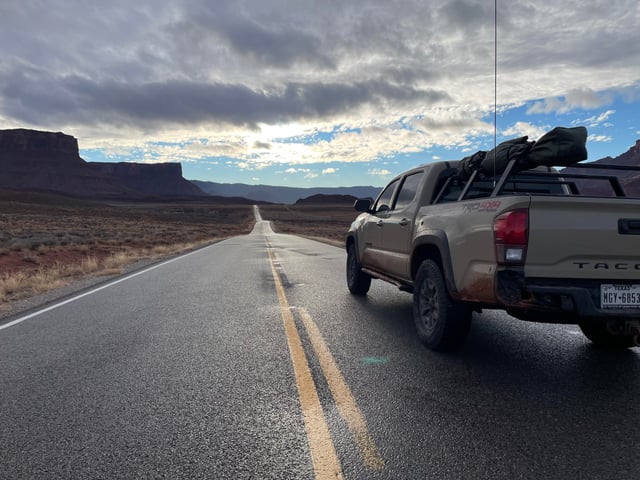
2. Ham Radio: A "Lifelong Skill" That Requires Study but Rewards You Well
Amateur radio requires passing an exam to obtain a license, which is indeed a hurdle. But once you cross that threshold, you gain capabilities that CB simply cannot match.
Core Advantages of Ham Radio
|
Feature |
CB Radio |
Ham Radio |
|
Number of bands |
1 (11 meters) |
Multiple (HF/VHF/UHF, etc.) |
|
Communication modes |
Mostly AM |
AM/FM/SSB/CW/Digital modes |
|
Legal power |
Up to 4 watts |
Up to 100-1500 watts (depending on license class) |
|
Communication range |
A few miles |
Global (via ionospheric reflection or repeaters) |
|
Repeater access |
Not supported |
Supported – dramatically extends coverage |
|
Emergency communication |
Direct only |
Via repeaters, APRS, emergency networks |
The License Exam Is Not Difficult
The US Technician exam has only 35 questions, covering basic regulations, safe operation, and simple technical principles.
Many online learning platforms (such as hamradioprep.com) offer free or low-cost courses. Study time is typically just 2-4 weeks.
Experience from a newly licensed amateur radio operator:
"I was really afraid of the exam at first. But once I actually started studying, I realized the content was all practical – things like which frequencies you can't use, how to avoid interfering with others, and how to choose an antenna. The moment I passed the exam and got my call sign, I felt a real sense of accomplishment."
3. Why You Should Get a Ham License
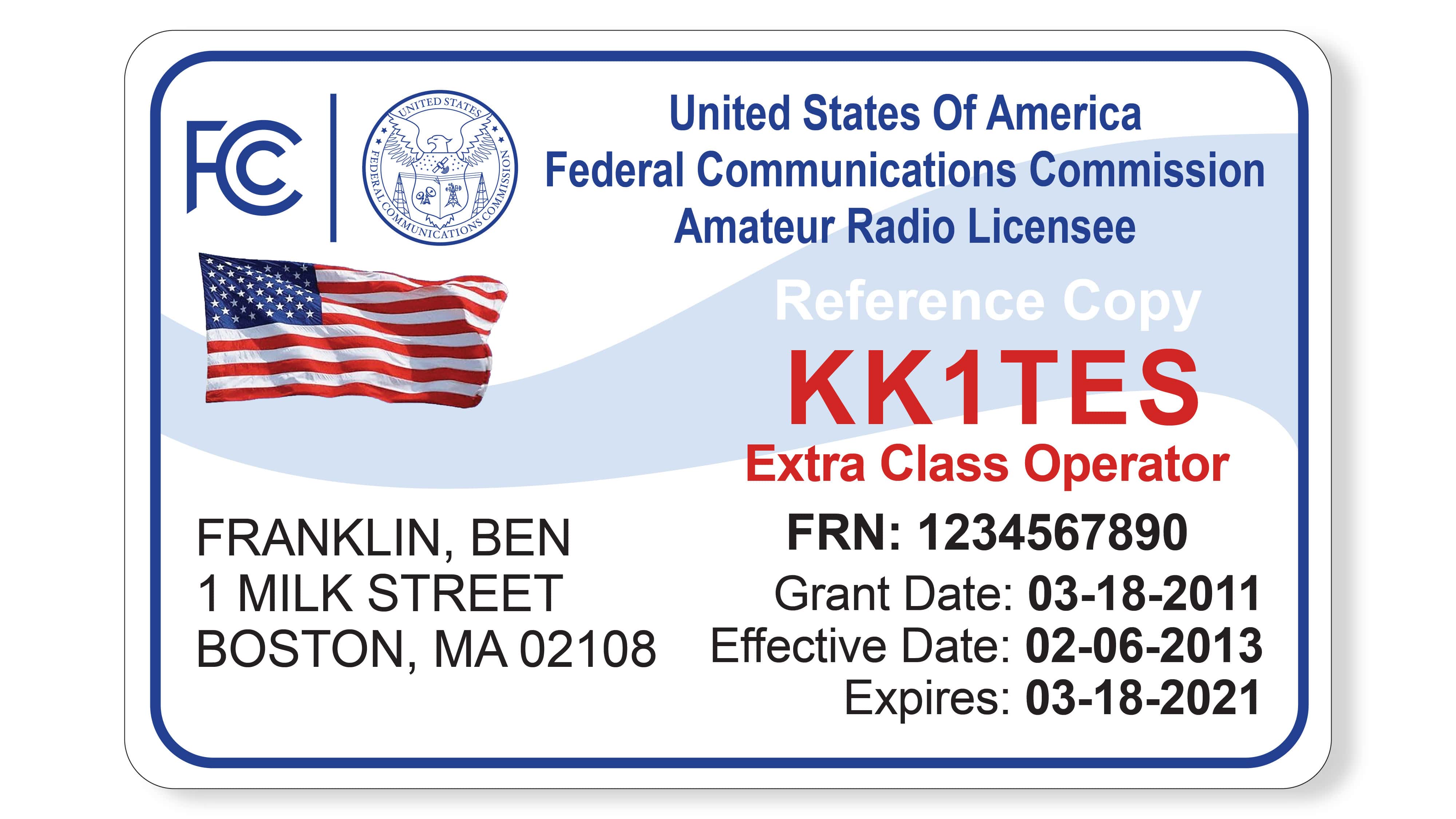
Reason 1: A Quantum Leap in Communication Capability
Via repeaters, a 5-watt handheld can cover an entire city or even farther.
HF (shortwave) bands allow you to talk with hams across your country or around the world.
FM mode provides clear, noise-free voice quality.
Reason 2: A Reliable Backup in Emergencies
In areas with no cell service (mountains, deserts, forests), an amateur radio is often the only tool that can contact the outside world. Many emergency organizations (such as ARES and RACES) are built on amateur radio networks.
Reason 3: A More Orderly Operating Environment
Licensed users must identify with their call signs and follow operating etiquette. As a result, ham bands are generally much more orderly and friendly than CB channels. Malicious interference is rare, and help is available if you have questions.
Reason 4: The Joy of Continuous Learning
Amateur radio is not just about talking – it is a technical experimentation hobby. You can try:
Building your own antennas to improve range
Using digital modes like FT8 to make contacts worldwide with very weak signals
Communicating via satellite relays or the International Space Station (ISS)
Participating in emergency communication drills to serve your community
4. Beginner's Recommendation: RETEVIS Allunce HA2
If you decide to get your amateur license, you will need a handheld radio that is feature-rich, user-friendly, and suitable for beginners. The RETEVIS Allunce HA2 is designed precisely for this purpose.
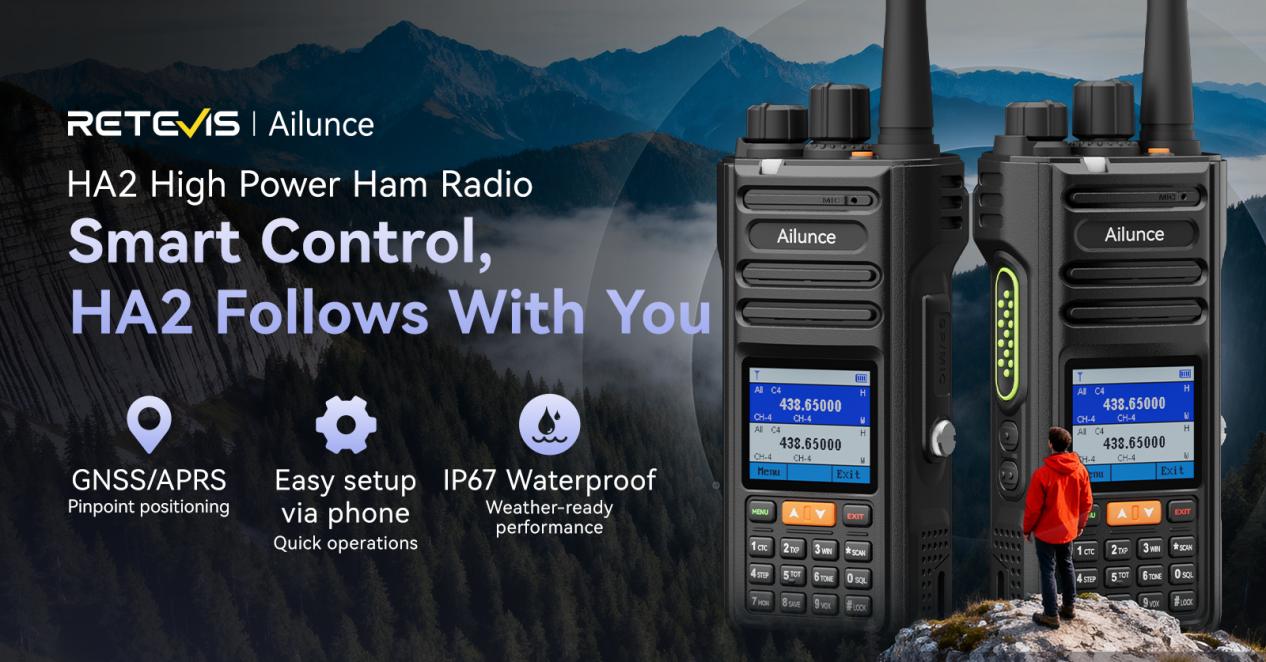
Smart Control: Mobile App Makes Setup Easy
Bluetooth quick configuration: Connect the HA2 to your mobile app – no need to press complicated buttons on the radio itself. Complete frequency programming and parameter settings easily.
Seamless ecosystem collaboration: Manage the device directly from your phone, including parameter management, firmware updates, and data synchronization.
Secure encryption: Uses secure pairing mechanisms and data encryption to prevent unauthorized read/write access.
Bluetooth Voice Transmission: Break Free from Cables
Bluetooth headset / Bluetooth speaker mic: Say goodbye to wired headsets. More flexible to wear, ideal for long-duration communication (e.g., convoy travel, outdoor hiking).
High-quality wireless voice: Audio data is transmitted via the Bluetooth channel, improving communication efficiency and comfort.
Simplified on-site wiring: Reduces the number of cables, making field deployment faster and cleaner.
GPS / APRS /COMPASS
GPS real-time location: Obtain latitude, longitude, and altitude information. Record movement tracks for route playback – useful for patrols or transport.
APRS real-time position sharing: Built-in APRS capability, combined with GPS, provides real-time positioning, tracking, and short message broadcasting. Open the mobile app or computer map, and the precise locations and movement tracks of all team members update in real time. Whether for convoy travel, outdoor hiking, or large events, coordinating, finding teammates, and preventing separation has never been this simple or efficient.
Compass:Instant Orientation, Double Safety:Integrating a compass into two-way radios allows real-time orientation without extra gear, reducing the risk of getting lost in the wild. Teams can instantly share directional info, boosting coordination in search, patrol, or emergency response. It adds minimal bulk and power drain, ideal for outdoor and tactical use.
IP67 Waterproof: Ready for Harsh Environments
The HA2 achieves an IP67 dust and water resistance rating. It works reliably in rain, snow, or dusty conditions – perfect for off-roading, expeditions, and rescue operations.
5. Conclusion: Start with CB, but Don't Stop There
Returning to the CB vs Ham Radio question:
CB radio is a simple, low-cost, license-free entry tool. It is suitable for short-range, non-technical, occasional communication.
Ham radio is a powerful, expandable, lifelong skill that requires study but rewards you handsomely. Getting an amateur license is not only an investment in your own safety but also a gateway to global communication and technical exploration.
Final advice:
If your need for radio is only "occasional chat with friends," CB is sufficient. But if you want more reliable communication capability, enjoy technical discovery, or want an extra lifeline in critical moments – spend a few weeks getting a ham license, then start your journey with a feature-rich radio like the RETEVIS Allunce HA2.
References & Learning Resources:
US ham license exam prep: hamradioprep.com
Find local exams and clubs: ARRL.org
RETEVIS Allunce HA2 product details: Visit the RETEVIS official website
From CB to ham – from "can hear" to "can reach far" – your radio journey is worth taking the next step.