+86 15093323284 hams@ailunce.com




Ham Radio vs CB for Off-Road: Range, Licensing & Real User Advice
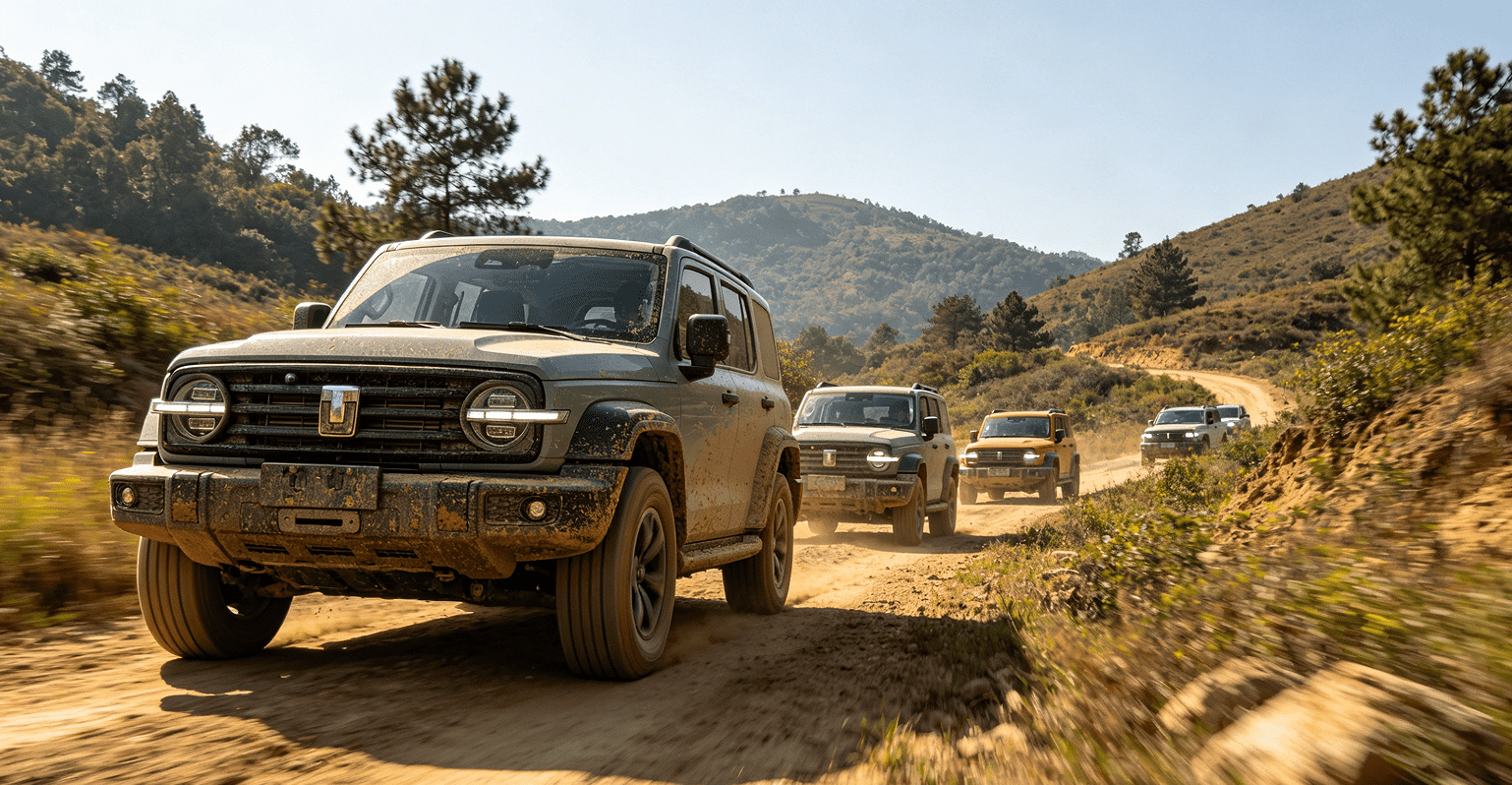
Communication Range & Terrain Adaptability: Who Keeps You Connected in Valleys and Forests?
The biggest challenge of off-road trails is complex terrain – valleys, dense forests, and steep slopes can severely weaken radio signals. Field tests show significant differences between the two.
How CB Performs on the Trail
CB radios operate on 27 MHz (the 11-meter band) using AM mode. On open flat ground, the theoretical range is about 3-8 kilometers (2-5 miles). But in off-road conditions:
In valleys: Signals are absorbed by hillsides, and effective range often drops to 1-2 kilometers (0.6-1.2 miles). The lead vehicle and the tail vehicle can easily lose contact.
In dense forests: Trees attenuate AM signals significantly. Even a moderately long convoy will experience dropouts.
Advantages: CB equipment is inexpensive and requires no license. It works well for short trips, low speeds, and line-of-sight convoys.
Experience from a veteran off-road trail guide:
"We've run the Mojave Desert many times with CBs. On the ridge lines, we could talk. But as soon as we dropped into a canyon, we lost all contact. The convoy had to stay extremely close, and the lead vehicle was constantly waiting for the tail. For groups larger than 3 or 4 vehicles, CB just isn't enough."
The Off-Road Advantages of Ham Radio
Ham radios can operate on VHF (136-174 MHz) and UHF (400-470 MHz) bands using FM mode. They can also use repeaters to dramatically extend range.
FM resists interference: In the same terrain, FM voice clarity is far superior to AM, with very little background static.
Better penetration: The UHF band penetrates trees and obstacles better than 27 MHz.
Repeater coverage: Many off-road areas have amateur radio repeaters on nearby peaks. A 5-watt handheld can achieve tens of kilometers (over 20 miles) of coverage through a repeater, easily connecting the lead and tail vehicles.
Emergency rescue: In remote areas with no cell service, a ham radio is a critical backup link to the outside world.
A real experience from a Colorado off-roader:
"Last year, we were traversing the San Juan Mountains. One vehicle slid off the trail and got stuck in some trees. Our CB couldn't reach the vehicles behind us at all. I used my ham radio handheld to contact a ham operator 20 miles away through a repeater on a nearby peak. He made a 911 call for us, and rescue found us using my coordinates. Since that day, I always carry two ham radios when I go into the mountains."
Ease of Use & Learning Curve: Plug-and-Play vs. License Required
CB: Limited Functionality
No license required: Buy it, set a channel, and start talking. Perfect for users who don't want to study.
Very simple operation: Basically just a channel knob and a volume knob.
Limitations: You cannot adjust power, cannot use repeaters, and the communication capability is "fixed from the factory."
Ham Radio: Requires Study, but Rewards You Well
License required: In the US, you must pass the Technician exam (35 questions). In other countries, similar basic exams exist. Topics include basic regulations, safety, and simple technology.
More complex to operate: You need to learn how to set frequencies, tones (CTCSS/DCS), repeater offsets, and more.
Practical advice: Most off-roaders agree that a few weekends of study is well worth the huge gain in communication ability.
Summary from an off-road veteran who uses both:
"CB is like a pocket knife – you can use it right out of the box, but its functions are limited. Ham radio is like a complete tool set – it takes some time to learn, but it can handle almost any situation. My advice for beginners: start with CB, and once you find yourself thinking 'I wish I could talk to the guys farther back,' that's the time to upgrade to ham."
Team Configuration: The Most Critical Decision Factor
The first rule of off-road communication is: Match your team. Technical superiority means nothing if you cannot connect with the people you are traveling with.
When to Choose CB
Everyone in your off-road group already uses CB and has no plans to change.
Your convoy is small (3 vehicles or fewer), the route is open, and distances are short.
As a backup monitoring device – for example, listening to trucker traffic updates on the highway.
When to Choose Ham Radio
Your team uniformly uses ham radios and shares common frequencies or repeater settings.
Your convoy is large and often runs long-distance, mixed-terrain routes.
You want reliable emergency communication as a safety backup.
A Practical Compromise: Use Both
Many off-road convoys adopt a dual-device strategy:
Primary communication: Ham radio for clear, long-distance conversations within the convoy.
Backup monitor: CB to listen to local traffic conditions or talk to CB-only vehicles that join temporarily.
Configuration from a Utah off-road guide:
"I have a ham radio permanently installed in my truck for main convoy communication. Right next to it, I keep a handheld CB tuned to Channel 19. This way, I get both reliable convoy coordination and real-time alerts about highway closures or accidents ahead. The two systems don't interfere with each other, and the extra cost is minimal."
Product Recommendations: Matching Equipment to Your Choice
Based on the analysis above, once you have decided which direction fits your needs, here are two radios designed with off-road use in mind.
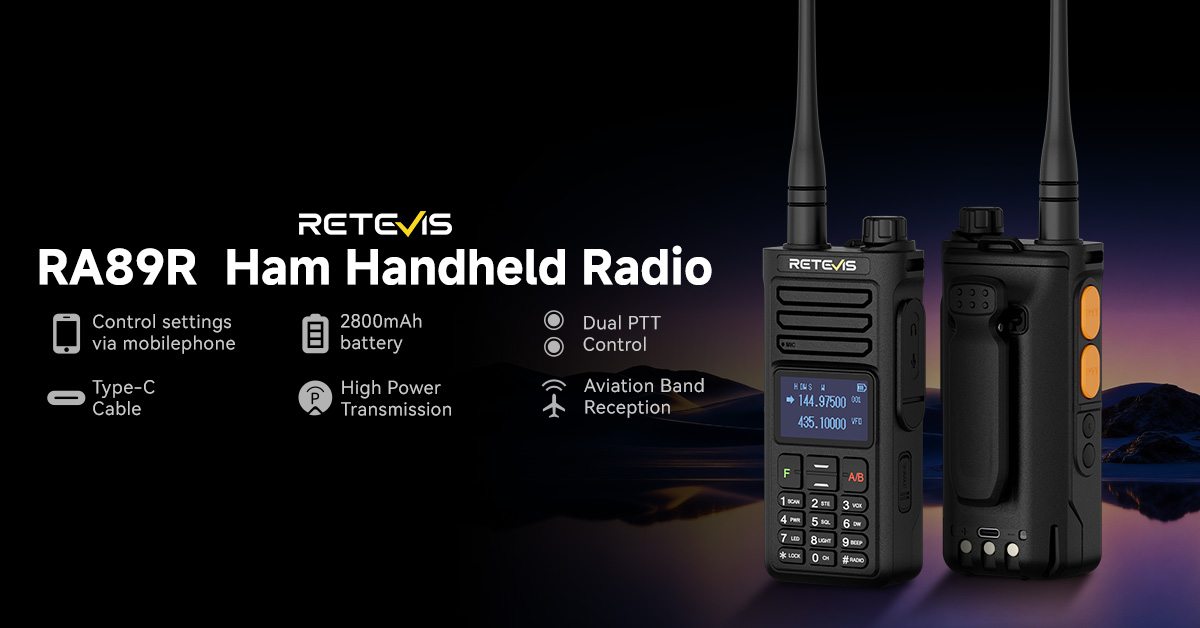
If You Choose Ham Radio: RETEVIS RA89R
The RA89R is a handheld radio that supports cross-band repeating – a valuable feature for off-road teams.
Key function: It can automatically receive a signal on one band (e.g., UHF) and simultaneously retransmit it on another band (e.g., VHF). This means that even if some team members have only UHF radios, the RA89R can act as a bridge, allowing them to talk to VHF users without everyone buying new equipment.
Off-road friendly design: Supports smart programming via a mobile app – very convenient for making frequency changes in the field. It also uses a Type-C port for both charging and programming, reducing the number of cables you need to carry.
Best for: Serving as a portable repeater for a mixed-fleet convoy, or as a bridge between different frequency bands.
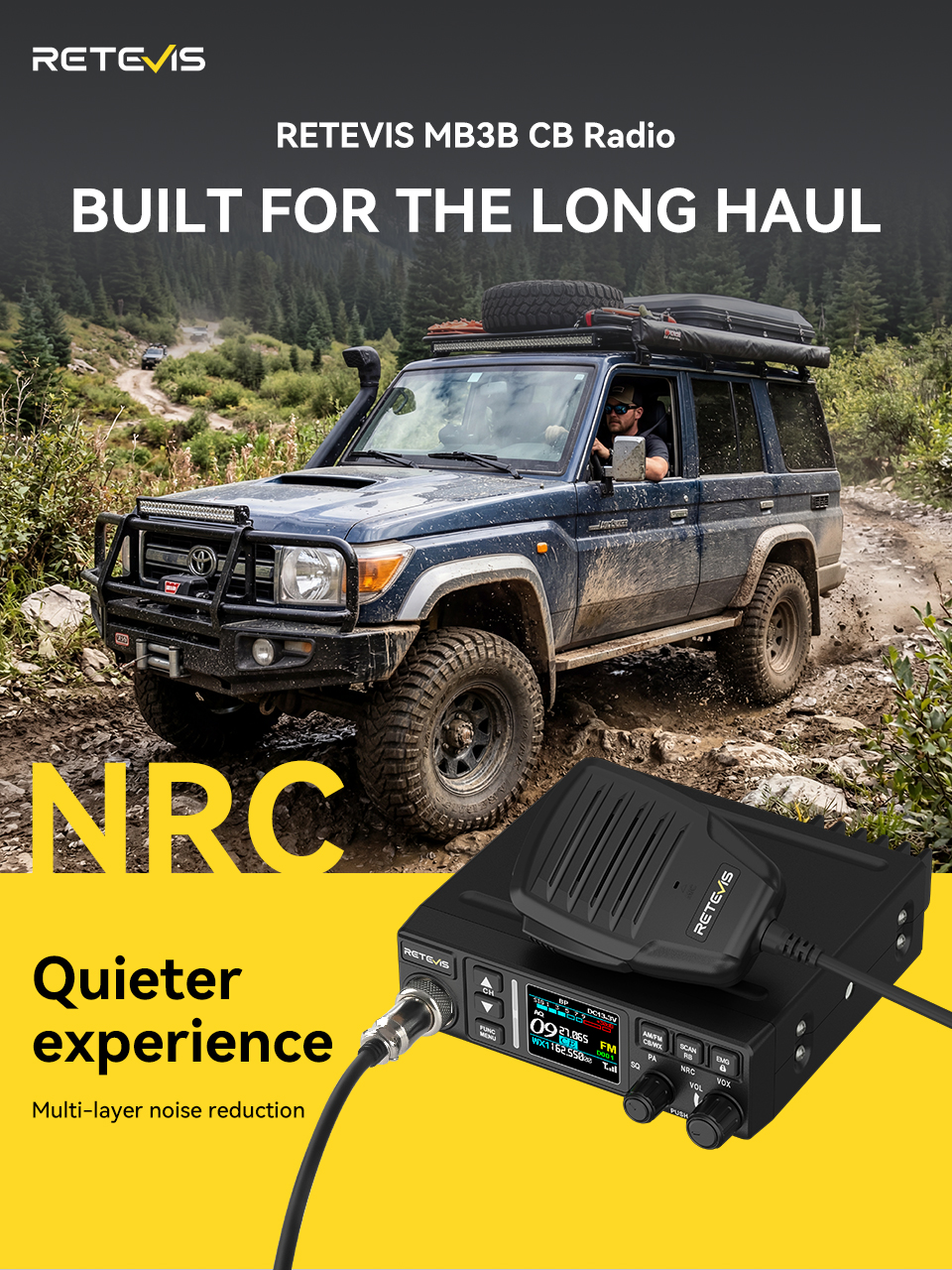
If You Choose CB: RETEVIS MB3B
The MB3B is a full-featured mobile CB radio with several enhancements for the off-road environment.
Practical features: Includes a color display for easy operation, NOAA weather receive for real-time severe weather alerts, NRC noise reduction to cut down engine and wind noise, and antenna SWR protection to prevent damage to the radio from a poorly tuned or damaged antenna.
Best for: Serving as the primary radio in a CB-only convoy, or as a reliable backup monitor for ham radio users.
Conclusion: Make Your Choice Based on Your Team and Terrain
So, for off-road use, ham radio vs CB – which should you choose?
Choose CB if: Your team is small, your routes are simple and short, everyone already uses CB, and you do not want to take a license exam.
Choose ham radio if: You want longer range, clearer voice quality, reliable emergency capability, and you are willing to spend a few weekends studying for a license.
Best practice: Many experienced off-roaders keep both – ham radio as the primary communication tool, and CB as a backup and traffic monitor.
Final advice from a volunteer who has participated in many off-road rescues:
"A radio is not for showing off. In a critical moment, it is your lifeline. Whichever system you choose, know your equipment inside and out, test it regularly, and make sure it works with your team's setup. That matters far more than any spec sheet."
References & Learning Resources
US ham radio license exam prep: hamradioprep.com
Find local exams and clubs: ARRL.org
Off-road frequency planning: Check with your local amateur radio club
Off-road safely, starting with reliable communication.